
Airtel’s premium segment has been pushing its Airtel Priority postpaid plan, which guarantees customers elite service, no wait times at call centers, and faster data speeds. This sounds perfect for high-end corporate users and heavy data consumers. The plans range from ₹499 to ₹1,499+, including corporate and family options.
Yet, by mid-2026, many premium subscribers report severe problems on platforms like X (formerly Twitter) and Consumer Complaint sites. They mention data slowdowns, dropped calls, and glitches that stay unresolved. So, this essay will break down the current Airtel Priority postpaid plan troubles, alongside real user stories and the government rules controlling these premium services.
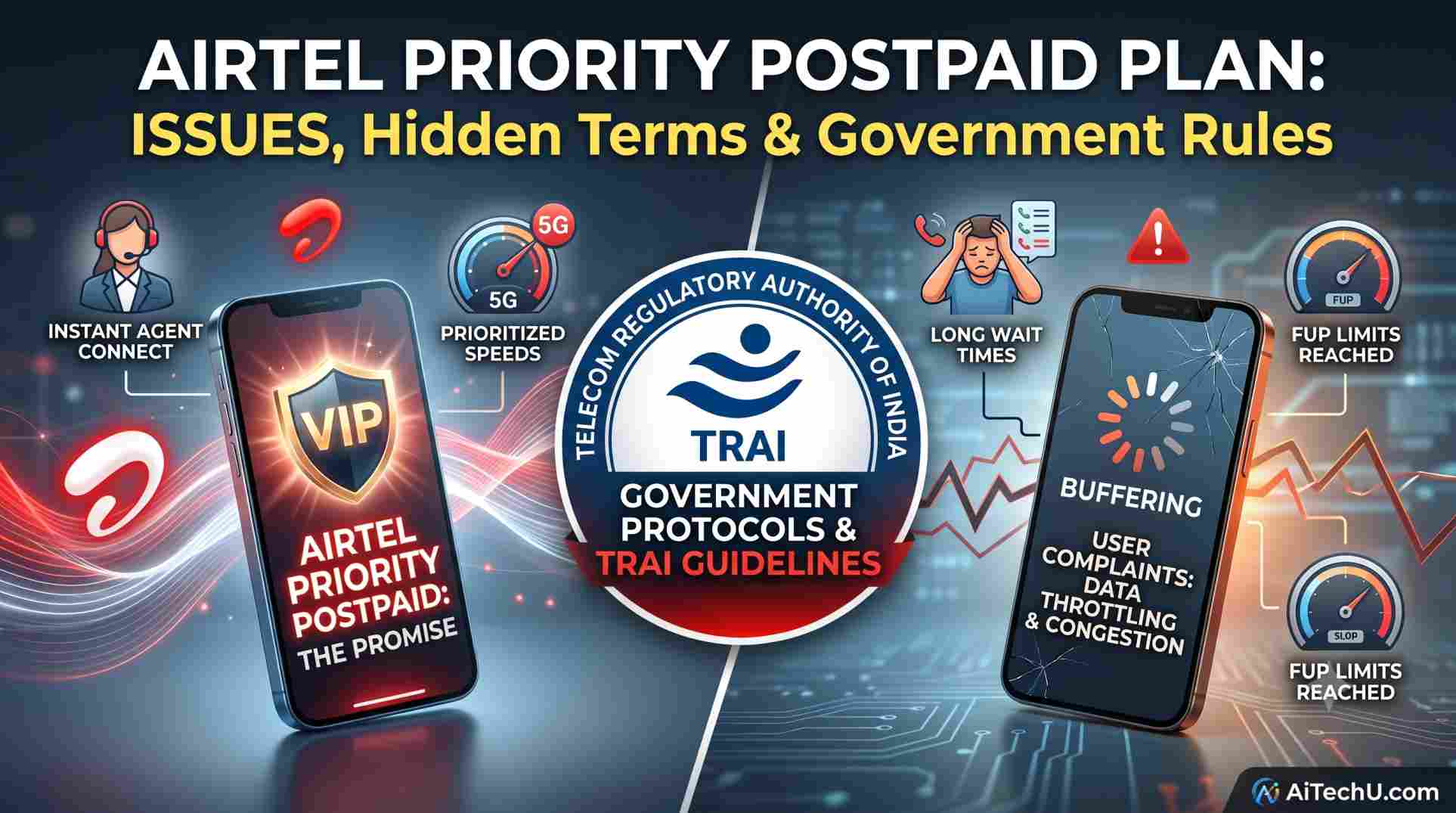
What is the Airtel Priority Postpaid Plan Promise?
To get into the controversies, we first need to know what exactly subscribers are paying for. Airtel includes their “Priority Service” with pricey plans for both businesses and individuals. Key features are:
They can skip the auto-reply system to speak straightaway with higher-up customer care reps. Also, in super crowded spots like train stations or sports venues, priority plan SIM cards go through less busy network paths, making their 5G or 4G data way faster. Plus, users get free passes to Disney+ Hotstar, Amazon Prime Video, and Wynk Premium.
Still, despite these perks, there’s been lots of grumbling from customers about the gap between what was promised and what they’ve actually gotten.
Major Issues Faced by Airtel Priority Postpaid Users
In the past few quarters, the premium telecom market has been dealing with a lot of consumer frustration. Airtel Priority postpaid plans, in particular, are getting a lot of heat from subscribers. One major gripe is about data speeds after the Fair Usage Policy limits kick in. So even though Airtel boasts huge data pools for these plans, the small print gets people every time. As soon as the limit is reached, speeds plummet to just 128 Kbps, which is almost useless.
Another big issue is that promised priority on 5G networks doesn’t always deliver. During rush hour in major cities, these special SIM cards often slow down to 4G speeds or less, defeating the purpose of the Priority plan altogether.
Last but not least, customer service hasn’t exactly lived up to its VIP billing. Many of these premium customers have to endure wait times of five to seven minutes or more when calling for help, which goes against Airtel’s “Instant VIP Connect” guarantee. Subscribers aren’t happy at all, feeling like the perks they paid for just don’t exist.
Government Protocols and TRAI Guidelines on Priority Plans
The Net Neutrality Guardrail
TRAI lays down clear rules: internet providers can have different service levels, but they can’t slow down basic plans to prioritize speedy ones for VIPs. They have to keep bandwidth fair throughout their networks.
Transparency in Plan Advertisements
New guidelines say companies like Airtel need to be upfront about their data limits, speeds, and any special offers. Listing only high speeds without the fine print on their site or app is against the rules.
Strict Quality of Service (QoS) Metrics
TRAI keeps tabs on the Quality of Service every three months. If a paying customer hits roadblocks, like constant call drops or slower speeds than promised, and the company doesn’t fix it in time, they can take action. The customer can voice complaints to the Telecom Ombudsman or the National Consumer Disputes Redressal Commission (NCDRC).
My Opinion: Should You Upgrade to Airtel Priority Postpaid?
Hold up if you’re thinking about switching to the Airtel Priority postpaid plan for supposedly magic-speed internet.
Your phone service depends a lot on local towers, physical stuff blocking signals, and the amount of spectrum around. So, having a fancy plan won’t fix slow speeds if the nearby tower’s overpacked or lacking fiber. Your device will still lag big time.
That said, the plan does make things easier. You can handle family mobile bills in one go, roll over extra corporate data, and skip pesky auto-attendants for real human help.
But for getting super fast data? Relying on a stable Wi-Fi is way better than going for the fanciest cell plan out there.
Frequently Asked Questions (FAQs)
Q1. What is the Fair Usage Policy (FUP) limit in Airtel Priority plans?
Ans. While retail plans often market data as unlimited, standard individual priority plans generally enforce an FUP cap ranging from 150GB to 300GB per billing cycle depending on your exact plan tier. Beyond this, speeds drop to 128 Kbps.
Q2. How can I lodge an official complaint if my Airtel Priority data is underperforming?
Ans. You can log a formal complaint via the Airtel Thanks App or by emailing their appellate authority. If the internal resolution fails within 7 days, you can raise a grievance ticket on the government’s National Consumer Helpline (NCH) portal or approach TRAI-backed public grievance cells.
Q3. Does the priority postpaid plan offer faster 5G speeds than regular prepaid?
Ans. Theoretically, Airtel’s core network algorithms prioritize traffic coming from high-value postpaid SIM cards during high-congestion periods. However, in standard daily conditions with normal tower loads, both prepaid and postpaid users access the same maximum bandwidth limits.
READ ASLO: Airtel fully unlimited 4G & 5G data plans